Hair today, gone tomorrow?

So I used to have this GREAT hair cut!

Back in Virginia Beach, my neighbor Dee was a genius at cutting hair and she came to my house and she only charged $10. For someone like me, with a chronic illness and little energy, this was great!  Even without her cowboy boots, Dee stood over six feet tall. She had long red hair halfway down her back. I’d sit on the front porch to wait for her. She was easy to see striding down the sidewalk.

Sometimes she’d come and just cut my hair. Other times I’d gather a small group of family and friends and we’d all get haircuts. Dee was an artist. When Dee was finished cutting your hair, it looked super. My hair cut incited envy every place I carried it. Perfect strangers would stop me wherever I went and ask me who cut my hair. Dee was THAT good.

So, all right, the hair cut experience might include strange conversation about imminent danger to the immortal souls of Pat Robertson and other regulars on the 700 Club. According to Dee, there were people out there in the clutches of Satan and they knew she was working to overthrow them and they knew where she lived so she had to take special precautions so they wouldn’t come after her. Which might be why she moved and left no forwarding address or telephone number.

Without Dee, I went longer than usual without a haircut. Then I moved here to Richmond and I went even longer. Dee would cut a swing bob for me that could go six weeks without a trim. But it was several more than six weeks and I had to do something.

So I walk into one of these chain shops with multiple chairs and no appointment required, right? I figure the beautician can look at the hair cut I’ve got and just cut it shorter, right?
HA! And I can look at the Mona Lisa and just paint it larger, too!

So I walk out with a similar haircut to what I had, but somehow without the pizzaz. A swing bob missing the swing. Nice and neat and BORING.

Two months later, I try another chain. I know, I know — this fits that classic definition of insanity — “trying the same thing over and over and expecting different results” — but I was so busy painting walls, planting flowers, reading street maps to find the post office, etc. that I hadn’t found a place in the brain under my hair cut to assign the task of finding another true artist to cut the hair cut.

I arm myself with a magazine photo of a woman with (what looks to me) a simple hair cut. The beautician says Sure, she can do that for me because I have very fine, straight hair just like in the photo. She cuts away. Wet, it looks like she’s pretty much cut what I ‘d hoped for — but then — completely missing the point of this haircut — she spritzs my hair with volumnizing gel and blow dries it into a style. I am totally puzzled but figure this will wash out.

Once home, it’s obvious she must have put a bowl over my head when I wasn’t looking and cut around it. The hair persists in looking like this even after I wash the flowery smelling gel out.

So I took the scissors into my own hands. My hair came out looking like a different photo — my great grandmother in 1932. Sadly, my days of turning heads were over.

So, years ago, I’ve settled into what is essentially a non-decision that takes no energy at all: I just let the stuff grow. I trim my bangs. If I still had a waist, my hair would be waist length.

But if you see Dee coming down your sidewalk, head and shoulders above the crowd, long red hair swinging across the back of her denim jacket — grab her while you can!

Caught up in Catch-Phrases

My brother has had a Facebook page for years. His son set it up for him, and, as far as I could tell, he never looked at it. But now, suddenly, he is appearing live on Facebook. So he chats with me:

  • “Hey, Julie! Do you remember the phrase When Lou gets his organ?
  • “Remember it? I still USE it!”
  • “Seriously?”
  • “Do you remember Keep those elephants moving?
  • “No. What was that about?”

Does every family have certain catch-phrases particular to that household? In our house on West Main Street, back in Shelby, Ohio, we tossed out catch-phrases as shorthand to sum up a situation, or as the punch line, or just for silliness.

When Lou gets his organ began life as a straight line. My brother’s first rock band was a sketchy proposition. He had a guitar, his friend had a bass guitar, and another friend had some drums. Lou, who didn’t have an organ — yet — was part of the band. Lou would sit by as they practiced, attentive, listening for the places where his instrument should join  in. After every song, one or another of the band would say “That will sound great when Lou gets his organ.” Lou never got the money together to buy an organ and the statement remained stuck forever in future tense.

In our family, we could be talking about something we were going to do or wanted to do, or something someone else said they wanted to do. The chances of you pulling it off? Yeah, right. When Lou gets his organ! 

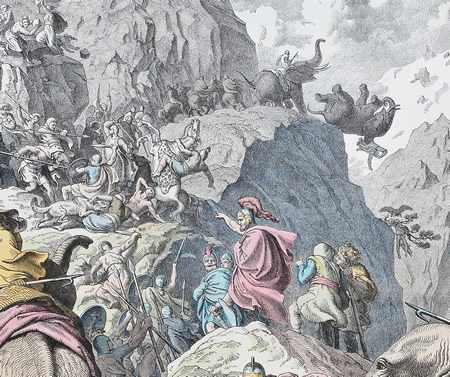
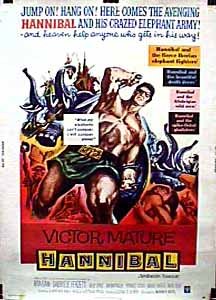
In this same way, Mama might tell us to Keep those elephants moving!  This line jumped out of a scene in a bad movie* where Hannibal is crossing the Alps to take Rome by surprise. I mv5bmjaymtgzodk2of5bml5banbnxkftztywmjgxmjg5-_v1_mean, who would even try to cross the alps with elephants, right? That’s a surprise right there, let alone the horses, legions, chariots, and everything else.
The tension in the scene is that there’s a blizzard and if the elephants stop they will freeze to death. So over and over we hear someone ordering someone else to Keep those elephants moving! It was an awful movie. We watched it over and over on our black and white TV. The same movies got played on rotation late at night like they were re-runs or something. Or anyway, that’s how I remember it.

For us, Keep those elephants moving! morphed into an admonition  to get the dishes washed or get our butts out the door. A very useful string of words, Keep those elephants moving! Nagging without the sting. You might want to adopt it yourself, even if you haven’t watched the movie. (I’d advise against it.)

Then there’s He’s got trunks of them in the attic. This comes from a joke so simple even I can (usually) tell it though it will lose a lot in translation to text. So here’s a summary.

  • Patient:  Doctor, my friends think I’m crazy!
  • Dr. stroking his goatee:  Do they now?
  • Patient:  Yes! They tell me I’m crazy because I like pancakes.
  • Dr.:  You like pancakes?
  • Patient:  Yes. I like pancakes.
  • Doctor:  There’s nothing wrong with liking pancakes. I like pancakes myself?
  • Patient:  You do? You like pancakes?
  • Doctor:  Yes, I do. I like pancakes.
  • Patient:  Doctor, you must come home with me. I have trunks of them in my attic!

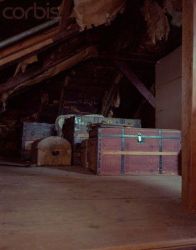
9259134bfeb5865131c3d4b10b82928cThis joke made a big impression on my family. Even my father liked it. It sums up an aspect of human nature we are all familiar with in one form or another.
She’s got trunks of them in her attic applies to those quilters who whisper SABLE (Stash Acquisition Beyond Life Expectancy) to themselves when they see their own face in a mirror. Anything –even beautiful cotton fabric, or gorgeous yarn, or blank canvases — accumulated in excess is a sign of trunks in the attic.

Overworked and put-upon? Or you think you are? We had a phrase for that, too. And then I had to feed the guppies. SIGH!

This was from my Gram, who, it seemed to us, had had an easy life. She’d grown up with servants and a summer cottage bigger than any home I’ve ever lived in. Her married life began comfortably, too — bridge, bonbons, furs, cook, gardener, maid.  But these privileges gradually fell by the wayside until she was doing the housework herself. Her letters included lists of slights suffered and onerous tasks, culminating in  and then I had to feed the guppies. (We tacked on the SIGH! )

I think Gram projected her many disappointments onto those innocent guppies. My uncle left a few guppies behind when he got married and moved out and those few guppies guppysdevelohondatolimacolombia__8445c8_4multiplied as my Gram overfed them. Their descendents filled the big tanks in the sun room. I can imagine poor Gram, overwhelmed with unwelcome changes to her life, and on top of everything else, standing by helplessly as there were more and more hungry guppies to feed.
I don’t know what ever really became of those swishing swarms of little fish. There was some story about one huge guppy per tank. But all I know for sure is they weren’t there when Gram and Gramps moved out of that house and into an apartment near the Norristown zoo. After that, Gram sometimes complained about the screeching of the  peacocks, but she never took it personally.

The whole world is MUD! was often the final pronouncement of my three-year-old daughter as she collapsed into sudden sleep, naked atop a bare mattress, with the pillows, books, toys, blankets, sheets and pajamas strewn about on the floor where she’d thrown them. My husband and I can’t load this phrase with the indignant certainty our daughter did, but  we sometimes use it to convey a more subtle sentiment than the mundane Oh, shit! The girl had a way with words, even at three.

Once, when two of our young sons lay on the floor with legs tangled together, neither boy could get up off the floor when asked because, they each explained, He’s holding me down. I call up this phrase when my husbands asks me to do something that requires me to stand up. I might indicate my reluctance with He’s holding me down.

Since we are a book-loving family, we quote classic literature, too. My husband might be looking for his keys or phone or hat and he might say to himself; Look on the chair, Teddy Bear! (I didn’t say we quoted high-brow literature.)

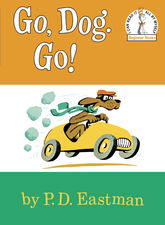
Go! Dog, Go! was a big favorite with our children. When I first got sick with chronic fatigue/fibromyalgia and we had just moved to a strange city, I often got lost. As I would 225x225bbdrive over the same bridge in Dayton, Ohio, for the second — or third — time, one of the boys in the back seat was sure to recite Go around again! from the page where the dogs are riding a ferris wheel. Later, Go around again! fit the circular reasoning of the teenage boys of the household, trying to wheedle their way out of something. And it still works when I get lost, which still happens.

Do you have words or phrases that your family members understand but which make outsiders scratch their heads?

Do you know the stories behind them?


*Perhaps “escaped from” is more accurate. That movie was really bad.


No work declutter!

I complain to my husband that on top of a fever, now my left ear hurts, too, and I have an infected toe and he says to me,”Sounds like your warranty is about to run out.”

Last week, I was well enough to be away from home for three days and enjoy it. Coming home to three days of email at once, a pile of snail mail, laundry, etc., can be daunting. At my best I can’t keep up with day-to-day responsibilities. In spite of the lists and notes littering my desk, it takes some effort to remember what I was doing (or should have been doing) before I left and to pick up the pieces.

Then the ear ache I had assumed was just a variation on my usual myriad pains got worse — throw some weird dizziness in there with it,too — and I end up at an urgent care center. Sinus infection.

My plans for First Day (the day the world calls Sunday) had to be set aside. I missed an early morning meeting, I missed meeting for worship, and I missed visiting a  prison in the evening. I missed seeing friends. It was a set-back to my self-esteem. I want to be reliable, but I’m not. (I didn’t miss the afternoon nap I’d planned. The morning nap was unplanned.)

Of course, this situation is not unique to those of us with chronic fatigue/fibromyalgia. Taking your place in the ranks of responsible adults can devour your every waking moment even without the handicap of illness. Anyone can feel overwhelmed. (This is no excuse for telling someone with an invisible illness: “I wish I had time to laze about and read all the books you do.”) There is pressure on us to keep the house clean and the lawn green, to dress with style and style our hair, to cook healthy meals and pay our bills on time and show up on time, and exercise and volunteer and Be Happy! Otherwise, we are failures.

The demands are never ending. You set your head on your pillow hoping for sleep and little worries nibble and nag at your ease — “Did I pay that bill?” “Where did I stick the W-2s?” “Is there enough milk for breakfast?” — and sniffle around for any crumb they might have missed. We live with too much paperwork and too much stuff.

Oh! Just picture those happy (imaginary) aboriginals, who lived from hand to mouth when fruit, fish and fowl were only an arm’s length away. So many contented hours of leisure, wallowing about in warm shallow waters, laughing quietly together.

That was (probably not) then and this (really) is now. Now we are wage slaves, scuffling about for lucre to buy the necessities. And the list of necessities is a long and ever-growing one. Basic food, clothing, and shelter is not only complicated to acquire, it isn’t exactly basic anymore.

My Nana raised her five surviving children in a Pennsylvania fieldstone farm house. There was a pump at the sink and a kitchen garden outside the back door. The upstairs had no heat or lights. Nowadays, we expect electricity, indoor plumbing with hot and cold water, central heat and AC, WiFi and a full array of helpful appliances.0da25afc4650a0f2fbc93bfaf8f0f623

We take such convenience for granted, but it comes with not just a price tag, but also a price. The price is your attention, your time, your life.

The biggest chunk of time required, the chunk that eats up a huge portion of our lives, is earning money to pay for necessities, conveniences, and luxuries, if you are among the privileged. If you have remunerative, meaningful, fulfilling work you might not resent this. But the after-work hours are not all yours either.

As my middle son said to me this morning about filing his income taxes: “I’m a millwright, not a damn secretary!” But he’s wrong and he knows it. He can work with his tools for pay, but he will pay if he doesn’t sort his mail, pay his bills, save the necessary receipts, and file his taxes before the deadline.

And he and his spouse share all these jobs, too:

  • Dusting
  • Washing
  • Cooking
  • Repairing
  • Vacuuming
  • Polishing
  • Shopping
  • Mowing
  • Banking
  • Commuting
  • And on and on . . .

One popular solution to all this busyness is Simplifying! It follows that the fewer possessions you own, the fewer you have to take care of. There are books you can acquire to help you simplify and organize and downsize your possessions. (But beware how many of these books you bring home or you defeat the purpose.) And sometimes downsizing itself can be too much like work.

Quilters have a handy word for those among their number who keep bringing home more and more fabric (it’s tempting — there are so many beautiful fabrics): SABLE, Stash Accumulation Beyond Life Expectancy. You can joke about SABLE but if all your fabric is on your credit card and you can’t pay off the balance, maybe it’s not funny. If you spend more time shopping for fabric than you do stitching quilts, you are a shopper/collector, not a quilter. If you are hiding fabric purchases from your significant other you need a 12-step group.

But fabric, like other possessions, can also bring joy into your life. While you are making a quilt, you might think to yourself: This needs some orange to bring it to life. And you have the perfect shade of orange fabric right there in your stash! You don’t want to downsize a stash if you use it. Simplifying, in this case, could diminish your life, not enhance it.

One person’s too-many-possessions could be another person’s delight! My friend Mary displays a collection of hand-blown glass spheres suspended in a row in her front window where they catch the light. They are beautiful! They are joyful! My own front window is unadorned. I prefer not to dust. If I could easily ignore the dust in my house, I would have beautiful things on every surface. Because I can’t comfortably ignore dust in my house for long, I compromise and have only a few things.

Sometimes I fantasize about living in a Tiny House.

But who am I kidding? My sewing and art supplies — let alone my piano — wouldn’t even fit in a tiny house. And my husband might like to bring along his books and my dog weighs 90 lbs. and wouldn’t fit either!

So it comes down to this: Change your attitude, change your life!

I can downsize by tossing off the pressure to be perfect. I can simplify my life by not fighting against reality. This will free up energy for things I enjoy. If I accept a little more dust on the mantle and a little more dog hair drifting under the furniture, I create a happier life. This means accepting myself as I am, not as I “should be.”

And it’s less work. I can do it on my back!

What’s your solution? Or do you even need one?


Read more

Significant Others

Do you believe in love at first sight? Love at first sight took about three weeks for me after I met the man I sometimes introduce as my first husband (so far he’s also my only husband). It took him a few months longer, but I don’t hold that against him anymore.

We have a friend — let’s call him Pat because that’s his name — who met a young woman — let’s call her Teresa — one evening and that same night told her she was the girl he was going to marry. She scoffed at him. He was right. For him, it was love at first sight and it’s stood the test of time.

So I know love at first sight is a real thing, even though it’s never happened to me. But instant friendship? That has happened to me. More than once.

You meet someone new. They have a certain spark in their eye and you start talking to each other and you laugh in the same places. And you know that this is a person you want in your life.

A good friend is someone you can laugh with, cry with, confide in, share a story or a life with — someone who makes your eyes light up. Maybe you haven’t seen your friend for years but, when you sit down with them again and start talking, it’s like the conversation never stopped.

Once my best friend and I got the sillies at a middle school band concert because one side of the band director’s staticky pants crawled up his leg during the concert and his socks didn’t match. We were laughing so hard we almost got kicked out! And we were the parents!

Then there was the time another best friend and I baked fortune cookies with Bible verses inside. It was a lot of work — the cookies had to be folded up while they were still hot and pliable, right out of the oven. We laughed while we burnt our fingers just so we could set these cookies out with tea and coffee for the rise-of-meeting fellowship. And what was so funny, you may well ask? You didn’t see the Bible verses we choose. There is a ton of weird advice in the Bible.

I remember a lovely afternoon over mugs of tea on a friend’s screen porch. She was explaining the meaning of a phrase used by Turkish storytellers. I thought I’d never forget it. I did forget it, but I remember the delight in the story and the company.

Before I got sick, I was more gregarious. I was always going somewhere to do something with somebody. But chronic fatigue/fibromyalgia has knocked the stuffing right out of me and visits with friends are fewer and further between than I would like. And it may take me a day to two to recover. It is hard to maintain friendships when I spend way too many hours limp and exhausted, not up to the effort of conversation. On those days, I have a legion of other friends patiently waiting for my attention: Books.

Books are the good friends whose company is offered in just the right measure at just the right time. They are never offended if I close the cover and close my eyes for a rest. They just wait patiently until I return. Here are a few who have graciously visited with me lately.


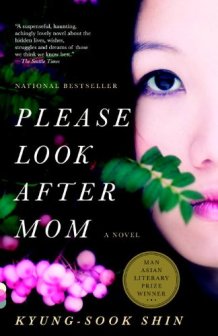
This book has a deceptively simple premise. The Mom of the title is lost in a crowd at a the train station and her children and husband search for her. For months. I was spellbound. This seemingly straightforward plot surreptitiously meanders into a narrative meditation 51fkgbcts7lon family and sacrifice. Like the Mom’s children, I was left wondering exactly what happened. The last pages offered not so much a resolution, as a graceful, grief-ful acceptance.

Because the story is set in South Korea, a geography and culture I know next-to-nothing about, the book took on fairy-tale qualities for me. The contrast between the illiterate, hard-scrabble mother and her educated, urban children grew larger and larger as I turned the pages. If the setting had been somewhere in the United States, my own assumptions — about the characters, the landscape, “reality” — would have overwhelmed what was actually written. I would have missed the beautiful questions set forth in the story.

The author has many other books to her credit and is popular in her native country. I look forward to reading more of her books and hope the translation reads as smoothly as this book did.


This is the full title of the P.G. Wodehouse collection as purchased through Amazon for my Kindle (only $1.99!). It’s a title worthy of P.G.Wodehouse himself!

The first pages of the first P.G. Wodehouse book I ever read were much like meeting that instant new friend. The sparkle in the eye! The underlying optimism! The cheerful exuberance whilst surrounded by human foibles! Let’s let the man speak for himself:

” . . in these days of rush and hurry, a novelist works at a disadvantage. He must leap into the middle of his tale with as little delay as he would employ in boarding a moving tram car. He must get off the mark with the smooth swiftness of a jack-rabbit surprised while lunching. Otherwise people throw him aside and go out to picture palaces.”

Truer words were never spoken! (Speakers at the James River Writers Workshops are forever telling us this.) The language is perhaps a bit antiquated, a bit English, but still fresh and lively at one hundred years old. Wodehouse just zips right along and the phrase “rollicking good fun” surely applies, even as I am stretched out on my bed, motionless except for my eyes scanning the printed page.

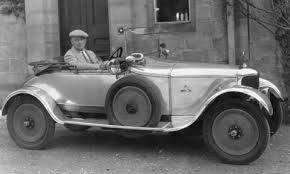
5e31e3f2042d8816a3131d3eb9884efcNothing truly tragic happens in a Wodehouse novel. There are no nasty surprises. There are always motorcars and sweeping lawns and long galleries and conniving aunts and well-heeled financiers and dotty Lords and fair young maidens and impoverished young men in love with them who somehow still have a valet and cigarette money. Even whenWodehouse introduces a “working stiff” the reader knows things will come out all right in the end. Wodehouse is not Charles Dickens.

Wodehouse’s England disappeared before he quit writing about it. Two World Wars hastened the changes. His novels remained stuck in an era long gone. Most of the plots, like historical romance, are set against a background of wealth. The characters are insulated from real human misery.

Wodehouse also wrote stories of teenage boys at school, playing cricket. Blow by blow accounts of cricket matches, however momentous in the lives of the boys, are not my cup of tea, no matter how fine the teacup. Now “feather-brained Bertie Wooster and his sagacious valet Jeeves” (as the collection’s biography refers to them) — these two can make me laugh. They are fine companions on a grey winter’s day.


Of course, I had to read a historical romance novel this week. Once a Duchess is from Elizabeth Boyce, a writer previously unknown to me who is a friend of a friend. I think I chose her first book for my introduction to her work.

The initial set-up was intriguing: we find a young woman and her single remaining 17385220servant living in a humble and chilly cottage. The disgraced ex-duchess, shunned by society after her divorce for adultery, is out of funds (hence the chill inside the cottage) and faces hard choices. She takes a job as a cook at the local inn and — of course — the Duke shows up in the dining room unexpectedly. The plot had the requisite number of twists, and a one or two on top of that that I never saw coming, that kept the Duke and his one true love apart until the last few pages.
Some blood was shed, some tears were wept, some unforgivable words were uttered. Apologies were made but not accepted. Ships were loaded with cargo, bound for South America. But true love conquers all.

This book was the quintessential historical romance experience. Never make the mistake of assuming that these books must be easy to write. They aren’t. And it’s always nice to discover a writer accomplished in my favorite genre. Boyce’s next book in the series is ready and waiting for me on my Kindle.


  • March by John Lewis with Andrew Aydin, illustrated by Nate Powell


51wsgthpq6l-_sx340_bo1204203200_

And this graphic novel is waiting for me next. It’s non-fiction and doesn’t promise any happy endings, so it will not be the reassuring comfort of light conversation. It will take a bit more energy to read.

According to my husband and youngest son, and the reviews I’ve read, March will be well worth the energy it will take out of me to read it.

Some friends are like that. Sometimes I need time to recover. Those can be the best friends of all.

What are you and your friends reading?


Scorched and Trembling:Locked in the Fiery Pages of Historical Romance

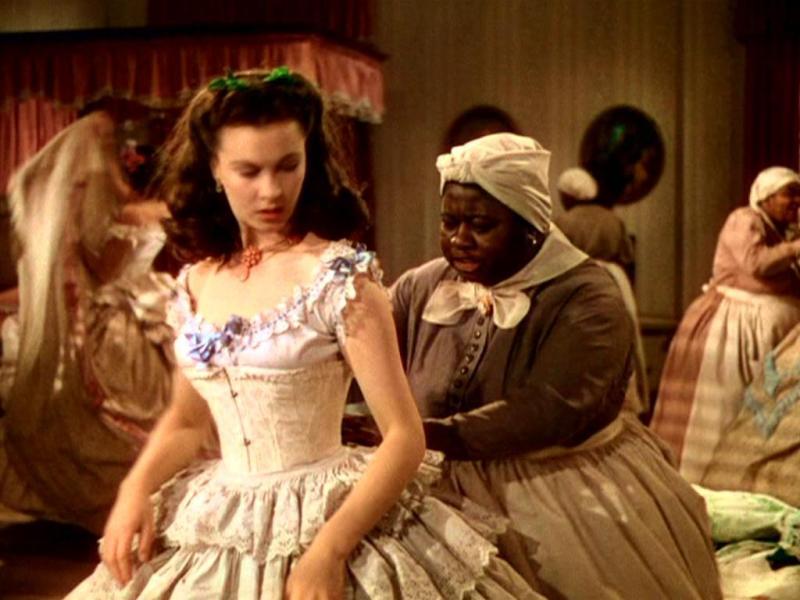
My Nana’s favorite novel was Gone with the Wind. She read it at least once a year, from 1936, the  year of its publication, until almost in 1980. She once told my aunt that if she could have any life she wanted, she’d choose to live on a plantation in the ante-bellum South, like Scarlett O’Hara. My aunt said, “But that would mean you’d have slaves!” and my Nana just shrugged her shoulders.

Can you hear my aunt’s gasp of shock at her own mother’s callous attitude?

My Nana was not a student of history. She probably never read a nonfiction account of slavery or the biography of an enslaved person, or any  of the slave narratives collected through the Works Program Administration. If she had, she could not have so easily dismissed the evils of the slave-dependent society with a shrug.

What Nana longed for was the effortless comfort and ease of fictional plantation life as portrayed in a sappy novel. Gone with the Wind is revisionist history, a contribution to bolster the myth of The Lost Cause. The book is (as Wikipedia states) “written from the perspective and values of the slaveholder and tends to present slaves as docile and happy.”

My poor Nana’s reading experience would have been totally derailed if Margaret Mitchell had sent Scarlett O’Hara to some place like Nigger Toe, Virginia.  There enslaved persons audacious enough to make an unsuccessful run for freedom had their big toes chopped off. Just a few drops of splattered blood on Scarlett’s dainty gown would have had Nana throwing her book across the room!

Gone with the Wind  is Scarlett O’Hara’s book, infused with the viewpoint one might expect from a woman of her time and place and class.  Margaret Mitchell drew upon family history for inspiration for historical background to the compelling plot . She herself was a descendant of slaveholders, Confederate veterans, and post-war entrepreneurs. When she writes, she can’t help but reveal the bias and blindness of her own caste. (This is true for every writer, of course.) That wasn’t so glaring to a typical white reader in 1936, but it doesn’t wear well.

If Nana had summoned up just a smidgen of empathy to the unnamed and unnumbered persons in the deep background of the book — the “servants” whose unpaid labor made possible the gracious life described in the opening pages — she might have felt differently about the book.

My mother and my aunt had no respect their own mother’s choice of reading material. Not just GWTW, her books in general. Their mother was a source of shame to them. Letters from my mother and my aunt always included book titles and the names of favorite authors. My Nana’s letter were about what birds she’d seen and how the neighbors praised her zinnias.

I came to share my mother’s and aunt’s opinion of light fiction, romance novels in particular. I read voraciously and I read serious novels and non-fiction, not trash like romance novels. People who read romance novels just didn’t measure up. A degree in English only hardened my attitude.

I remember arguing with a professor that The Hobbit could not be literature. He seemed amused as I fumbled around, trying to defend my assertion. Real literature does not have dwarves and dragons in it. (And yet, at the time, college students extolled Stranger in a Strange Land as profound! Go figure.)

After I married, we had subscriptions to “The New Yorker” and “The Saturday Review”. We read the short stories and the novels by the authors who wrote those short stories. My aunt and I exchanged letters with commentary on the works of John Updike. My husband and I stacked books double until the bookshelves bowed: fiction, history, biography, art, philosophy, etc. And if anyone pulled any one of those books off a shelf and read the title, it could only add to our fine opinion of ourselves and our superior choice of reading matter.

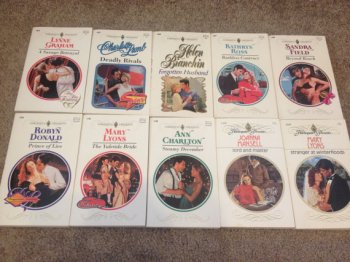
il_570xn-851240582_2khmLike my mother and aunt, I judged other people by what they read. You could be ever so nice, but if there were no books or magazines in your house you obviously weren’t my intellectual equal. This hard shell of disdain suffered its first crack when I visited the home of  my daughter’s advanced piano teacher who was also a social worker. Except for her piano, every surface in her front room was stacked with Harlequin Romances. She could read the look on my face.
“With my job,” she told me, “I need to come home to happy endings.”

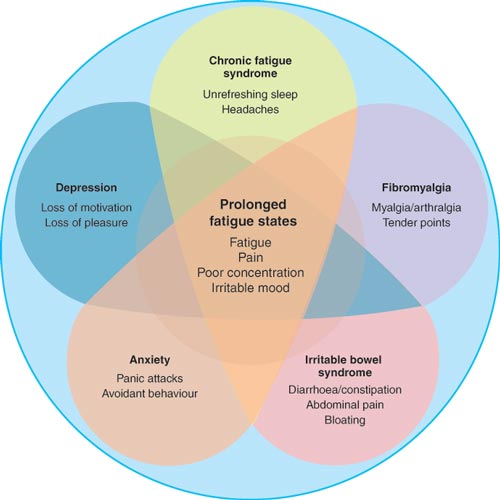
It was just a couple of years after that I got sick — really, really sick. So sick I couldn’t read anymore. I could read separate words but the last word in a paragraph no longer connected to any of the preceding words or phrases. I lost comprehension. The brain fog of chronic fatigue syndrome and the disabling pain of fibromyalgia knocked me flat.

My mind was clearest first thing in the morning, so I’d use that window to draw up a list of the essential chores of the day. That list — which I kept going back to over and over in the course of the day in a futile attempt to remember what I was doing — that list was the only literature I read. Since I seldom got through the list of mundane chores (load the dishwasher, wash white things, cook supper) it fell into the category of fiction.

After some time, maybe a year, maybe eighteen months, my down times weren’t quite as down and there were longer periods of mental clarity. Not mental sharpness. But I could read again.

I may have begun reading cozy mystery first. Agatha Christie certainly. These were easy to follow, amusing, not intellectually challenging. I wasn’t up to that. Thinking hard hurt (it still does). If I had enough wits about me to think hard, there was always a checkbook to balance, a grocery list to draw up, a family concern to address.

Like a lot of other things, I don’t remember when I started reading romance novels. We hadn’t had a television for a decade so, flat on my back, I wasn’t watching TV. There were long stretches of every day when I was awake but not well enough to do anything. If I was going to live through this illness without going insane I needed distraction without overstimulation.

Historical romance fit the bill. Also some sci-fi and fantasy (yes, even with dragons). I read the young adult fiction that the kids brought home, too. I gave up literary pretence in favor of a compelling plot and a happy ending. I was too upset with my own life to read anything with rape scenes, the tension of a stalker, a nightmare come to life, or any realistic portrayal of cruelty or suffering. I read for escape.

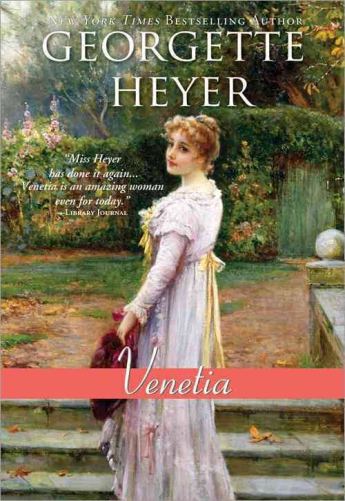
Slowly, I grew not-as-sick and am now able to read serious authors, too. But when I feel a imagesplunge coming on, I load up my Kindle with the likes of Mary Balogh and Eloisa James, Georgette Heyer and Marion Chesney. The best romance has echoes of the wit of Jane Austin, the playing of different characters against each other.
I may have to spend several days in a row reading until I am glassy-eyed. In spite of all those happy endings, I get depressed. When I find myself impatient with a romance novel, skimming to see how the plot works out, I know I’m starting to come out of my slump.

And how are these historical romances I read different from Gone with the Wind?

The sweeping changes in the southern United States were not mere background for Scarlett’s drama but a central component of the novel. The novels I read usually only pay lip service to historical events. They are all set in England. The main female character may find herself left without partners at a ball in Brussels as the officers rush off to Waterloo in their dancing slippers. Or perhaps, as in a book I recently finished reading, the Duke lost his first wife to the guillotine. In the newest crop of books, there seem to be many soldiers with PTSD.

There are thick historical romances with color cut from the encyclopedia and pasted on the pages. I find these heavy going. I don’t think I’ve ever finished one. If I want a lot of facts I can look them up myself, thank you. I like plots that keep moving.

The basic plot of a romance novel is some variation on this:

  • Man and Woman meet and hate each other on sight
  • Each fights his/her growing attraction to the other
  • Multiple misunderstandings keep them apart
  • They declare their love for each other
  • Something — a kidnapping, a knock on the head, a righteous parent — pulls them apart
  • They unite
  • They marry

In recent years, authors include graphic sex scenes. I usually skim over these, though the phrases used to describe the act intrigue me. How does a writer come up with this stuff? I don’t think Margaret Mitchell would approve. I’m not sure I do!

At one time (maybe still?) GWTW was considered literature. Jane Austin is literature, but Georgette Heyer is not. Eloisa James is the daughter of poet Robert Bly and a tenured professor of English Literature at Fordham University. Does that make her books serious literature? Do they teach these texts in women’s studies classes?

The decades between GWTW and my preferred novels have not eradicated the problem my aunt pointed out to my Nana. The main characters in my books are outrageously wealthy and their riches and privilege are accumulated through exploitation, cruelty, and callousness. There’s no way around it.

Authors themselves are getting bothered by this. Today’s author’s would never — like Heyer did in one of her novels — base her English aristocrat’s wealth on holdings in the colonies worked by slaves. Authors today sometimes try to minimize these failings in the characters: the Duke runs an enlightened orphanage for street urchins who think of him as the father they never had; the Earl is a generous and attentive landlord and builds a school for the village and refuses to enclose his lands; Lord So-and-so speaks passionately against the corn laws. Sometimes the female half of the love-interest rescues abused horses or dogs. As for the legion of servants required to maintain the persons, clothes, and palaces of this fictional aristocracy, under the benevolent hero’s care, they are well-treated, well-fed, loyal and content. If they are necessary on the main stage to move the plot along they are colorful characters. Sound familiar?

I can breeze by a little of this 21st century political correctness, but a little goes a long way. You simply can’t make “the wealthiest Duke in England” — which would have been stupendously wealthy in real life– a “man of the people.” Any author who tries ruins her book by calling attention to the underpinnings of the fantasy.

I’m not a social worker with real tragedy and uncertain outcomes shoved in my face every working day. I’m just one reader out of millions with my own not-so-good time to get through and I want an entertaining plot with a few laughs, likable main characters, and a happy ending.

Just like my Nana.


Where have all the matrons gone?

Looking at me you would not know that I am skinny. I have always been skinny and still am — at least in my head.

I was underweight the first half of my life. Even after socking on the pounds — 35-50 of them– during pregnancy, I’d shrink right back down to my skinny self. (Though after that fourth time, my waist never returned.) But then, in my mid-30s, I got knocked down by “yuppie flu” and gained thirty pounds in less than a year. My appetite thermostat reset, leaving me always hungry and too sick to move.

I no longer look or feel like myself. I have never been outwardly skinny again, and I have never gotten used to the body I now live in. My own expectations have been disappointed.

My mother had different expectations for me.

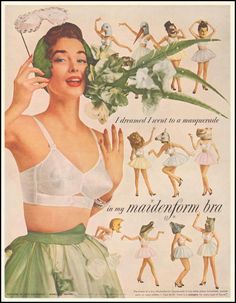
Mama was skinny and  stacked. When she hung the wash outside on the lines, she always hung her double-D white cotton bras on the inside lines between sheets or towels. In our small town, Mama had to special order her super-size bras at the dry goods store down on Main Street.

I also wore a bra. It was what teenagers did back then. But I didn’t need it. I disappointed Mama’s expectations for me.

f6353318f0b8a65d80c9e426ad0be696Her expectations were not unrealistic, given the genetics. She and her surviving sister were both quite well endowed. (After my aunt’s mastectomy, she confided that she wished they’d cut the second one off, too: the weight was a strain on her back.) Both my grandmothers, my father’s sister and mother’s aunts were all busty women. So what were the chances that I’d take after a skinny, flat-chested great grandmother?
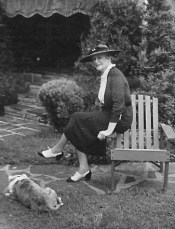

Good enough, apparently.

My mother was disappointed for me. Boobs were an advantage, in her book. And she loved me and wanted me to have every possible advantage.

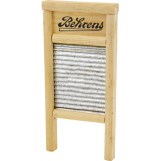
My two flat-chested great-grandmothers died in their 90’s, still skinny. My mother and her sister were skinny, too, and I got to share their high metabolism as a kind of compensation prize for being flat-chested. I could eat more cake and cookies than any of my friends and never gain a pound. And I was comfortable inside my washboard self.jpg

Once, in the early days of my first pregnancy, I was pounding away at my ancient typewriter and noticed some obstruction when I hit the carriage return: my swollen boob was in the way. It was inconvenient.

So this flat-chested woman got to “enjoy” being well-endowed during pregnancy and lactation. Of course, I knew that big boobs attract unwanted attention but I hadn’t owned that before. Later, when E.M. told me, sorrowfully, how no man ever looked her in the face when he talked to her, I understood her pain in a new way.

My breasts, insignificant as they were, worked when I needed them but I preferred them small. I liked the way my clothes hung on me and I liked moving around easily.

Now, I’m not skinny (outwardly) and I no longer have a high metabolism. Clothes don’t fit right.

And who are my models for this new self?

Women like my paternal grandmother no longer exist. She was stout, with trim ankles and feet in low heels. She wore pearls and furs and hats. Her dresses were belted at the waist.She was a fine figure of a woman. She was a matron.

liedy-c-creager-with-freckles-at-1600-markley-st
Great grandmother 

Unlike my grandmother, I have no pretensions to a standing in society, which was part of being a matron. It took some money to achieve that look, but the general demeanor was available to any  self-respecting woman of a particular age.

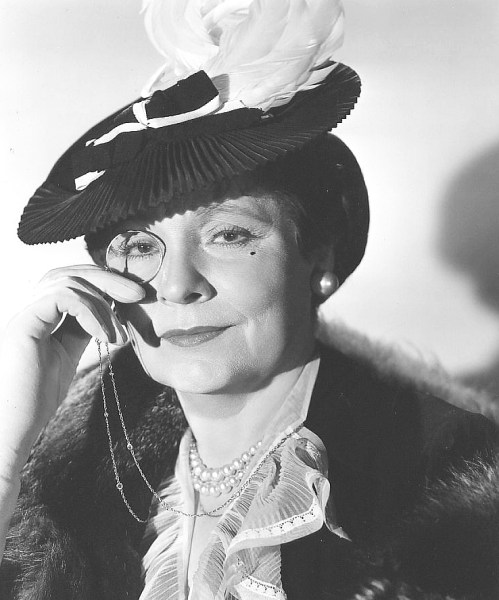
My grandmother was the primary matron in my life. But even when I was a child, matrons were an old-fashioned concept. Wealthy society matrons like Margaret Dumont were often foils for the antics of the Three Stooges or the avaricious desires of Groucho Marx  and those were old movies when my brother and I saw them at the Castamba Theatre for 25 cents a ticket. When I was in high school, grown women started buying into the glorification of the youth culture. My own mother dressed like a teen-ager. People often mistook us for sisters.

Now, almost all the models in all the magazines and catalogues are super-skinny, photo-shopped skinny on top of that, no matter what their age. My grandmother could enjoy her bonbons and bridge mix. These models look like they count the calories in lettuce leaves!  What happens to women in a culture saturated with unrealistic feminine ideals?

Consider Dolly Parton, a talented and estimable woman, with a rich voice and a loyal, generous heart. Even she is not able to be who she is. She found it professionally FERN BRITTON MEETS...DOLLY PARTONnecessary to surgically augment her breasts and have more “work” done as she aged. The way she looks now is a distraction from her beautiful voice.

What does it say about our culture when a woman like her needs to put herself under the knife to remain relevant in show business? When Carrie Fisher/Princess Leia appeared on screen as General Organa, she had to endure cracks about her weight — and she’d lost weight for the film!

I’d like to think matrons still have a place in a church ladies culture. But, as a Quaker from an unprogrammed meeting, I’m not part of that community, so I don’t really know if it exists. Hillary Clinton’s pant suits and precise blonde haircuts might suffice for some women (and most other female politicians). The gravitas necessary to a proper matron is there, but it’s an image primarily (I believe) adopted to be inoffensive.

Where is the contemporary version of the matron, one sans girdle and garter belt? A look I can emulate, without extreme dieting, manicures, or a face life? Dressing with character is an art and not everyone has the eye for it. I have some non-skinny artist friends who dress with style and aplomb, people who put fabulous looks together from thrift stores and consignment shops. But us ordinary people, who don’t have that talent, also don’t have the funds to hire a dresser to do it for us.

To be realistic, I just don’t have what it takes to pull it off. With low-to-no energy and extended bouts of inertia, I’m not up to it. It takes effort to create that look and energy to generate the aura that holds it all together.

Me? I guess I’ll just stay comfortable and insignificant in elastic waist jeans and denim jumpers. My signature fashion statement? Hand-knitted wool socks.

Margaret Dumont never had it so good.

But she sure looked super!


Ignore at Your Peril

It’s the start of a new year — the season for self-assessment and goal-setting. The season for lists proclaiming The Best of 2016: the best movies, the best books, the best headlines, the best Facebook Memes, the best tacos, etc.

Now that I am an experienced blogger — twenty posts in four months!  (I am trying to be funny here) — I have an obligation to share what I’ve learned in an end-of-year list!

So here it is — the best advice on blogging that I didn’t quite follow!

#1    All writers must blog.

  • Unpublished writers blog to build a platform to impress potential literary agents.
  • Published authors blog to promote their books.

To be honest, Point #1 is not something I just learned last year. Point #1 is something that speakers at James River Writers Writers Workshops have been pounding into my head for uncounted sessions. Point #1 is advice I resisted because it seemed to me that if every writer is writing a blog there couldn’t possibly be enough readers to go around. I thought I didn’t know anybody who read blogs.

Actually, I myself read blogs.

My sister writes the lovely Stag Beetle Power for homeschoolers in Portland, Oregon. I live on the other side of the continent but she posts occasional photos of my nephew and lots of photos of gorgeous scenery and close-ups of wildflowers and critters. And it’s packed with news of interesting local exhibits and workshops and great parks.

I have a high school friend who has traveled Tibet by pony and Europe by bike and walked the Camino de Santiago. She blogs to share her travels with her many friends. There is a lively young family I know, with adorable curly-headed children, who appear in a blog about their life, overseas and stateside, and I look at that. Their photos make even Cleveland look good. They post mouth-watering images of the exotic foods they cook, too.

chocolates-once
A watercolor that was intended to show the chocolates.


And writing blogs? There are some great ones. I’ve been reading those for years. my  Miss Snark, Literary Agent is my favorite. (Alas! She no longer writes this blog. The archives, however, are an entertaining education.) And Evil Editor! Bless his heart! He’s always ready explain “why you don’t get published.”

And, predictably, there are lots of blogs about blogging — LOTS! (And much of the advice is contradictory, beginning with the basic premise above that authors must blog because their readers will look for them even though many writers, like myself, are unpublished and nobody is looking for us.)

And, like most everyone else, anytime I want to know how to do something — roast chicken, knit cables, make a snow globe — I Google it. And often I end up finding the information I need in someone’s blog. So I was reading blogs even though I thought they weren’t blogs. Maybe everyone with a computer is also following one or two blogs and thinks they aren’t.

Maybe there are enough readers to go around.

#2    Writers are wise to develop a public personality before they need one.

Obviously, I learned this too late to apply it to my blog.

Besides, I don’t have the energy to develop a personality.  A personality requires upkeep and there’s a whole list of stuff I’m already not keeping up with!

Presenting a deliberate, alternative personality? I couldn’t do that with a script! Brain fog and bouts of exhaustion make me choosy about how I deplete my stamina.

It might be fun for a party, on a night I was up to it. Blue eye-liner and false eye-lashes and a wig. Maybe a hat with a sweeping ostrich plume and dangley earrings. I wouldn’t even have to say anything! I could just look mysterious. Maybe I wouldn’t even have to sit up straight. I could sort of drape myself across a piece of upholstered furniture.

That would be an easy public personality. Too bad it won’t work in a blog.

five-chairs2
Sometimes my watercolors also lack focus 

#3  Consistent subject matter is essential for a successful blog.

Okay. Just give me a D-. “Things I am Thinking About Today” is just NOT a consistent theme.

But, it’s early days yet. If I keep writing, maybe I’ll sight a Compelling Theme, like a drowning swimmer, bobbing up in this sea of words. And maybe I can throw out a life-buoy and pull it to shore and get a acquainted it. (Don’t hold your breath!)

In the meantime, this undeveloped personality will aim for consistency in the frequency of posts. It’s a modest goal. I might even pull it off.

But will anyone read it?


Who, Me?

I was mincing fresh rosemary at the kitchen table when my daughter said, “I met a woman who reminded me of you.”

Daughter told us she’d been in Jo-Ann Fabric buying pillow forms for the cushion covers she’d tie-dyed as gifts.* Those of you who shop at that store will remember how the registers are at the end of a u-shaped corrider formed by shelves stocked with candy, magazines, and other enticing items. On this particular day, just a few days before Christmas, the line was long. Daughter suspects a store policy of under-manning  registers to keep customers in line longer, right next to the enticing items, and thus more likely to make impulse purchases. Which is what she did: she stood in line long enough to notice attractive wrapping paper displayed right next to her and decided to buy a roll.

We all have heartbreak in our lives. Your heartbreak may not look exactly like mine but if you shared yours I would know what it felt like. I’ve felt it, too. One heartbreak of mine is that my daughter got sick at about the same age I did. Some of her symptoms differ from mine, and her doctors haven’t told her she has Chronic Fatigue Syndrome or SEIDS. Her doctors have a number of titles for her set of symptoms. But the end result is the same: deep and utter fatigue, unrelieved by rest. It’s a life changing condition, as, sadly, some of you know from personal experience. I wouldn’t wish it on an enemy. It breaks my heart to see my daughter struggle with the limitations imposed by this disease, whatever the doctors decide to call it.

And she was struggling that day in JoAnn Fabric. She was dead on her feet as she waited in that long check-out line with the two pillow forms she’d gone in for and the long roll of attractive gift-wrap clutched in her arms.

Then the woman in line in front of her turned around, looked at the gift wrap, and said, “Oh! I thought that was a cane! I thought you had a cane decorated for the holidays.”

My daughter said, “No, it’s not a holiday cane, but that’s a good idea.”

“I use a cane sometimes. I’d buy a decorated one,” the shopper said. “And I bet lots of other people would, too.”  And the woman was off and running with one suggestion after another for decorating canes for the holidays.

Daughter, in the meantime, is zoned out, so tired she wonders if she won’t fall right over.

But the woman goes on with even more ideas for holiday canes, culminating in a suggestion she acted out, right there in the check-out line, as if she were striking an imaginary someone with her imaginary holiday cane. “And you could use a holiday cane to wish someone Happy (thwack) Holidays (thwack) to (thwack) you (thwack)!”

Finally, my daughter reached the check-out counter where the clerk completed the transaction and asked “Would you like a receipt?” My daughter said yes and the clerk waved her arms at the register, intoning, “Come to me! Come to me!” as the paper spooled out of the machine.

There in my kitchen, we all laughed. (There were four of us. The main cooking was being handled by my son and daughter-in-law.)

In defense of the clerk, my daughter said she might have been punch drunk after too many days of too many customers too close to Christmas. Daughter had no explanation for the fellow customer wielding the imaginary cane.

“And she reminded you of me?” I asked.

“Yes. You are always talking to people.”

“Like that?”

And everybody laughed again.

It’s moments like this that make me miss my mother. She always appreciated my jokes, which was understandable because they are cut from the same cloth hers were. For example, when a couple of turkey buzzards were stalking around in the side yard, I called up the steps to Mama, “Hey! You aren’t dead yet are you?” And she riffed off of it. (This was before her diagnosis of terminal cancer. Too bad, in a way. That would have made for even better material than just being 80+ years old. We shared a kind of dark sense of humor.)

When we were kids, my brother made our joke-fest a trio. These days, my brother and I don’t exchange gifts. But sometime in the fall, I came across the perfect present for him: A Three Stooges figurine.three_stooges_figurine

My brother loved the Three Stooges. He could make all the noises that went with their eye-pokes and hair pulling. He had memorized his favorite Stooges routines. Who could forget Moe splitting dollar bills with Larry and Curly? Moe sat in the middle and dealt to both sides. “One for you, and one for me, and one for you, and one for me, and one for you, and one for me . . ” When we were kids, I couldn’t forget this routine because my brother tried to use it every time he dealt cards.

And for reasons lost in the mists of time, the Three Wise Monkeys were a family joke, too. See no evil, hear no evil, say no evil. This figurine I found was the Three Stooges version of the Three Wise Monkeys. So it should be a perfect gift for my brother.

I wrapped the box ten times, in ten different wrapping papers. I wrote out a tag saying something like “Ben and I hope you will like this wonderful goat milk soap as much as we do. It is so smooth and creamy. It is hand-crafted by a local artisan who milks her own free range goats and plucks her own organically grown herbs.” This tag was to deflate his expectations. I didn’t want him to get his hopes up.

Of course, he opened the gift the day it arrived. He left me voice mail complaining about unwrapping ten packages for only one gift. And I’m not sure he liked it, but he did say he’d put it on top of his TV, so that’s a good sign, right?

Oh well, I probably won’t send him a gift next year. Where would I ever find another gift as perfect for him as this one?

Maybe I’ll spot something while I’m waiting in that winding check-out line at Jo-Ann Fabric. Maybe — in that first set of shelves funneling customers toward the registers — maybe the perfect gift for my brother will be in plain sight — right between the Santa Pez dispensers and the selection of festive holiday canes.


610c7ifpzul-_sy679_


*A perfect heart in a lovely, pure red sits in the center of each design on the cushions. My daughter is really good at tie-dye!

Merry Christmas!

This week I experienced a streak of unusual energy, prolonged mental clarity, and almost bubbly cheerfulness. It felt wonderful! And it lasted for several days.

Maybe I’ll wake up tomorrow and feel that good again. With a chronic illness, you just don’t know. It could happen.

It was great to feel organized and effective: To feel, at the end of the day, that I’d been present and active in my life, not just watching through a smudged window. I felt happy about the chores I got done, not weighted down by the things I hadn’t gotten around to yet. And since the chores this week included wrapping presents, hanging a few lights, and plugging in our little Christmas tree, I was possessed by Christmas spirit. It was wonderful! (Did I say that already?)

My usual state — which varies in degree — finds me distracted, dizzy, muddled, in pain, nauseous, etc. Sometimes I have a background headache. Sometimes it’s a migraine. But what’s more consistent is a sense of failure. I never feel like I’ve done anything, even if I have. I just walk through my life. At the end of the day, I fall into bed weighted down with what I haven’t done. If I’ve managed to write two pages, I only remember that I didn’t write ten.

Today I didn’t write at all. I stumbled over my piano assignment. I did the laundry. That was good. What did I do the rest of the day? Anything besides drink cups of ginger tea and move things around?

I’m sure lots of other people — normal, healthier people —  also sometimes feel they spend major portions of their allotted time on earth moving stuff around. We own so many things. Dishes that have to be washed and put back on the shelves. Groceries that come out of the bags and into the cupboards. Somehow the trash can fills and has to be emptied. Newspapers, mail, magazines, books — a tide of paper, in and out, in and out, day after day after day!

For those of us who can’t always stay on top of this, it’s a struggle. And the world is not kind to those who don’t pay their bills, file their taxes, never sort the mail. (This is not me, in spite of my chronic problems. At least, it’s not me today.) Modern life can overwhelm us.

So I’m sure, that underneath lots of Christmas trees, wrapped up in shiny papers and bows, there are hardcover copies of books on  How-to-Declutter and Simplify Now!

We are a people of irony. We long for a simple life while we bring truckloads of more stuff into our house every year — at no time more obvious that Christmas. The packaging alone will overflow our wheelie bins.

img_20161221_201601

But this week, still glowing from that string of good days, I don’t feel like I’m an empty package myself. I’m happy about the holidays even though I ran out of energy before I ran out of chores (again). The Christmas lights are amazing, the giant inflate-able snowmen and T-Rex’s- holding-candy-canes are festive, and the lights dancing in patterns across the front of the houses are little miracles. And, look! Here’s our neighbor, wearing a Santa hat while he walks his dog. All good!

And while I may not feel as good as I did yesterday, I am still enormously pleased with my best decorating idea this year: battery operated twinkle lights trimming the cuckoo clock!

So I hope you are enjoying yourself, too, and, like me, have everything you need to be comfortable and happy, in spite of whatever the world might throw at you!


Do-it-yourself/Make-Do Christmas

We didn’t think we were poor. Compared to most of the people in the world, or even millions of other people in the United States, we were sitting pretty.

There were six of us in the family. We lived in a three bedroom, two story house with a fenced yard and large block garage and we could cover the mortgage and the utilities on Ohio’s unemployment benefits when we had to. We had union health insurance so we could go to the doctor and the dentist.

There was always plenty to eat, thanks to careful planning (think rice and beans, vegetable soup, and stir fry with brown rice) and the grandparents’ large garden and their canning skills. I baked the bread, made the yogurt, and “volunteered” at two co-ops. We had two cars that usually worked, and when they didn’t work, my husband worked on them. I thrifted, refinished, sewed, mended, patched, and cut hair. Friends stopped by daily and our parties were potluck and included all the kids.

We just didn’t have much in the way of expendable income.

Christmas present for the kids were chosen with care. We couldn’t afford too many, and we couldn’t afford to go into debt for the holidays, so each present had to be something they wanted and something that should last.

I kept my eyes open for stocking stuffers all year — small, age-appropriate toys or gadgets that would make an interesting bulge in a Christmas stocking. These were stored in a box in the closet beneath the stockings themselves.

scanned-image
Linocut Christmas card

The boys would clamor for the tallest Christmas tree that would fit beneath the ceiling. We waited to buy that tree until the last minute, when the few that were left were marked down to half price. They were also — every single one — crooked. We lodged the trunk in a metal bucket, among bricks, and filled in with pea gravel before adding the water. The skirt was an old sheet. It could be a challenge to set up a crooked tree, but once the decorations were on, no one could tell. (We hoped.) One year our tree had so few branches that our oldest son dubbed it the Christmas Spear.

After we bought presents for four kids, there wasn’t much money left to buy presents for anyone else. And half the joy of Christmas is giving presents. Those years when we were especially cash-strapped, we still wanted to give presents.

Luckily, before I got sick, I had boundless energy.

One year I ordered potpourri ingredients from Frontier Herbs through our coop. I combined star anise, lavender, rose petals, some essential oils and I don’t remember what all to make a very fresh potpourri blend. My daughter and I stitched up sachet bags and sachet cats with embroidered faces– dozens of them — from fabric scraps and ribbon and lace left from other projects. We boxed the bags and cats into gift sets and wrapped them up and mailed them out.

We were so pleased with how they turned out! We thought they were wonderful!  We set them off hoping the recipients liked the gifts one smidgen of how much we liked them.

Another year, my daughter and I paint and varnish to decorate clothespins — lots of them. We painted them all different colors and then painted designs over that first coat. These were an unexpected Christmas gift, to say the least. (They proved durable. I’m using some that outlasted my mother and my aunt.)

One year we made fantastic rum-soaked Christmas cakes and gave those to everyone. I put up luscious peach jam and handed those out.

For the Mothers’ Milk Bank Club Annual Bean Dinner and Christmas bazaar, I sculpted hundreds of salt dough ornaments. Each cat, or angel, or Santa, etc  was individually rolled and pinched into shape (similar to these). Every Teddy bear wore either Lederhosen or skirt. Every lion had a curly mane and every sheep had fluffy wool. I painted each figure in  multiple bright colors and didn’t spare the polka dots, swirls, tiny flowers or eyelashes. Each received three coats of varnish. I set up an assembly line in the dining room to churn them out. And I did it two or three (?) years in a row.

Other years I made appliquéd crib quilts which were raffled off at the bazaar.

There were bigger projects. My husband and I built, finished, and partially furnished two big doll houses, one for our daughter and one for my kid sister. And I assembled a set of reproduction antique porcelain doll head and limbs onto a cloth body and stitched up a Victorian wardrobe as a surprise for my daughter.

And one year my daughter learned to play piano pieces from a Scott Joplin sheet music book as her Christmas gift to me.

It was a challenge, making Christmas while making-do. A lot of our friends were in the same position so it felt normal to us. But as other families in our straits moved to greener pastures, and my husband’s jobs grew further apart and further away, we weren’t challenged anymore — we were stressed. We finally had to say goodbye to that house and that life and move to greener pastures ourselves.

It was during that move that CFIDS/SEID struck me down. I got out of the moving van with a case of flu, we thought, and it never went away. I am much better than I was in those first years, but I don’t take on any more big Christmas projects.*

Bobo with his rawhide wreath
Bobo with a holiday chew toy

Now there’s just the two of us and Bobo, the world’s best (because he comes when he’s called) dog, in a four bedroom house. We don’t buy a tree or fill any stockings. I just take the tree out of the box, set it on the mantle, and plug it in. It’s less than ten inches high and wears its ornaments all year. The stocking are hung by the chimney with care but they’re just decorative, too. A few strings of lights in the windows are the final touch.

These years, when I’m up to it, I make Christmas cards, usually linoleum block prints

socks
Socks. (Like you didn’t know that!)

turned out in assembly line fashion like those salt dough ornaments years ago. But the only Christmas presents I make these days are the knitted sort.We still have everything we need and plenty to eat (too much!). Nowadays, we even have some of that expendable income we used to hear rumors about to use toward presents.

But picking the right gift? — that is still a challenge.


*Well, except for the needlepoint piano bench cover I made for my daughter and her husband. The first year they got the blank canvas and a promise. The next Christmas they got the finished cushion featuring life sized portraits of sock monkeys Leslie and Fred.