Thrift Store Lust

DSCN3111.jpg


My friend Sallie, a dear friend of my late mother’s, shared Mama’s zest for Scrabble, a wicked sense of humor, and the thrift shop staying power that determines “luck” for finding bargains.

Commenting on my last post, Sallie — just like Mama would have done — immediately recalled her favorite thrift store find: A designer wool reversible coat, probably cost around $1000 new. Great fit!” And then she did a turn-about with my question: “What was your favorite find, Julia?”

My mind went blank.

If Mama were still around she would have jumped in and answered the question for me. Mama remembered not only her favorite finds — and when and where and how much she paid — she remembered mine!

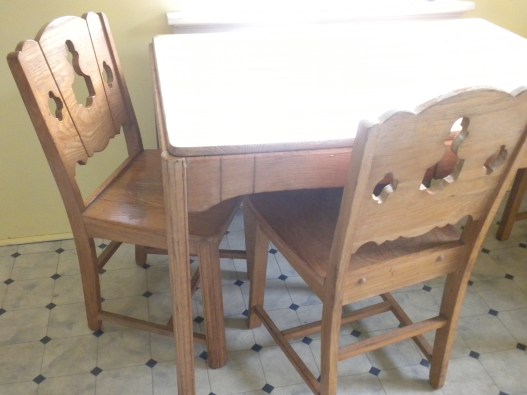
But when I woke up this morning, the answer popped into my head: my Three Bears kitchen table and chairs!  To me, they look like the furniture Goldilocks would have found in the Bear family cottage (except all the chairs are the same size), or what Hansel and Gretel might have seen inside the Gingerbread cottage. It was love at first sight when my eyes first beheld this set.

I was working at Things Unlimited, a thrift/consignment store run by Virginia Beach Friends School, when a man and his father (?) brought this solid oak set in for donation. The man seemed reluctant to part with the set and the older man seemed impatient with him. (Just like Mama, I began spinning backstories to explain this tiny glimpse into the lives of the strangers in front of me.) Why would anyone give away such wonderful furniture? Maybe he was sick? Maybe he was moving out of the country? Why?

I admired that kitchen set so much I had to make up reasons why the owner would ever give it away. I saw it, and I wanted it.

The store manager priced the five piece set at $100, a lot of money for me at the time. I worked part time, for minimum wage, with accommodations for my illness. I wasn’t working for the fun of it. Even with shorter hours and fewer days than the other employees, after I walked the two blocks home from the store I was often too exhausted to do anything else. Someone else had to cook the supper and switch the laundry. Little as it was, we needed the money.

So I dampened down my lust for the kitchen set and walked away from the love of my life.

Thrift store employees are subject to attacks of this kind of avarice triggered by objects that come through the store. It can be contagious. I fancied myself less susceptible than my coworkers because I didn’t have much expendable income and the five of us lived in 850 square feet, including the front porch. (The library two doors down counted as the half-bath.) Not much room for impulse purchases!

The most acute case of Thrift Store covetousness at the store was over a Les Paul guitar. The clerk who priced the it, knowing my oldest son was looking for an electric guitar, asked me if I wanted it. I set it aside in my section to ask my son about it. But when Benji heard my description, he called his brother-in-law and they decided the guitar was worth a lot of money and maybe I should get it so we could sell it and get Benji the guitar he wanted.

As I headed back to work after my day off, I was faced with a moral dilemma. Do I tell the manager this is a valuable guitar? Or do I buy it so Benji can get the guitar he wants? I don’t remember what I decided — only that I was torn. Was it me who told the manager she should get an expert to check it out? And did I do that before or after I learned that another employee was pressing the clerk who originally priced it to let her have it? That her husband had even been in to look at for himself. Feelings ran high, all centered on this object — a Les Paul guitar. Even co-workers who didn’t want it were indignant for one reason or another. It was an itchy, unpleasant, hot contagion! and a nasty working atmosphere.

The manager did consult an expert. Said expert assessed the guitar and said the bridge was bowed — a common injury to guitars — and because it needed extensive rebuilding it was only worth some piddling amount. He bought it. (In the back of my mind, I wondered if that guitar infected that guy, too, and he cheated the store.)

So when I walked away from that best-kitchen-set-in-the-world, I had to wonder if it was true love, or just a passing fancy.  But my co-workers reminded me of the discount for employees, and the payment plan I’d never used before. I decided this really could be a last relationship.I longed for that kitchen table and chairs. I returned to the sales floor, removed the tags, and headed for the manager’s office.

3 Bears

As I made my way back to the sales floor to tape a SOLD sign to the table, two different customers stopped me to ask for a price on the kitchen set.

I did not tell them an employee bought it (me!) and for only $75 at $25 per month. Why ask for trouble? Certain customers already thought we saved the best stuff for ourselves. (And, subject to fits of avarice, this was sometimes true.) I did think the set was priced too low. But I didn’t price it and the manager didn’t price it low because I wanted it. She just wasn’t blinded by love, like I was.

And that Three Bears set served us well in our converted cottage there in Virginia Beach. When we pulled the table open and flipped up the hinged leaf, the table filled the dining room. Guests were advised to use the window in case of fire.

Now we have a dining room table ($50 at Diversity Thrift, oval, curved legs, looks good if you cover the surface with a table cloth) and my Gingerbread House table and chairs are in the kitchen. After all these years together, they need sanding and new varnish. Maybe someday I’ll do that. In the meantime, we use them everyday.

And I am still in love.


Thrifting is in my Blood


            I was a second generation thrift store clerk.

Goodwill Industries was an angel for my mother. After a suicide attempt, Mama was afforded a long, leisurely rest at the state hospital in Columbus, Ohio. Once she regained her strength, she remained there but took the bus from the hospital gates to a Goodwill store for “training”.

Mama loved working at Goodwill. There was always something new to look at and interesting people to meet. She made friends with some of the regular customers and got to know what they were looking for. Old postcards? Vintage dolls? Gold jewelry? Sometimes she’d set back and hold small items for her favorite customers.

When Mama’s Goodwill location was scheduled to shut down, a few of those customers offered to serve as references for Mama in her search for a new job. Because of them, she landed a position as a copy clerk at a research facility that paid well enough that she could afford her own place. (And she stayed long enough to get a pension.)

Mama not only worked at Goodwill, she shopped there. And even after she changed jobs, she continued to “thrift.” She appreciated nice things and, thanks to thrifting, she surrounded herself with them. And she bought things for others.

My infant daughter had LOTS of clothes. Except for a few special outfits I stitched up for her, and her underwear and shoes, almost everything she wore came from Goodwill or from the yard sales Mama tracked down every weekend.           

After Mama retired, she moved from Columbus to live near us in Virginia Beach. She had a tiny house of her own that had once been the servant’s quarters behind a summer cottage. She quickly found the best thrift stores at the Beach and furnished her place with her finds. Her walls were covered in framed pictures of all varieties, whatever appealed to her. And if something else appealed to her the next month, she’d switch out the artwork.

I came to depend on Mama’s shopping prowess. I was often flat on my back — the volatile weather at the ocean front aggravated my CFIDS/SEID — and I didn’t have much energy left for tramping around in stores. The grocery was often too much for me, thank you. But if I wanted a bathrobe, or a black cotton cardigan, I would just tell my mother. She accepted each request as a personal challenge, like a quest! It might take her months, but she’d find whatever I’d asked for.

All her friends ( and some of mine) were envious. How did she ever find that perfect Liz Claiborne dress? And she paid how much for this tea-kettle? She was SO LUCKY!

And let’s take a look at Mama’s luck. Her luck worked like this: she went thrifting often and knew which stores had good stuff and reasonable prices. She checked the yard sales in the newspaper and mapped out a route to ones that looked promising. She took her time. She bargained. She was charming.

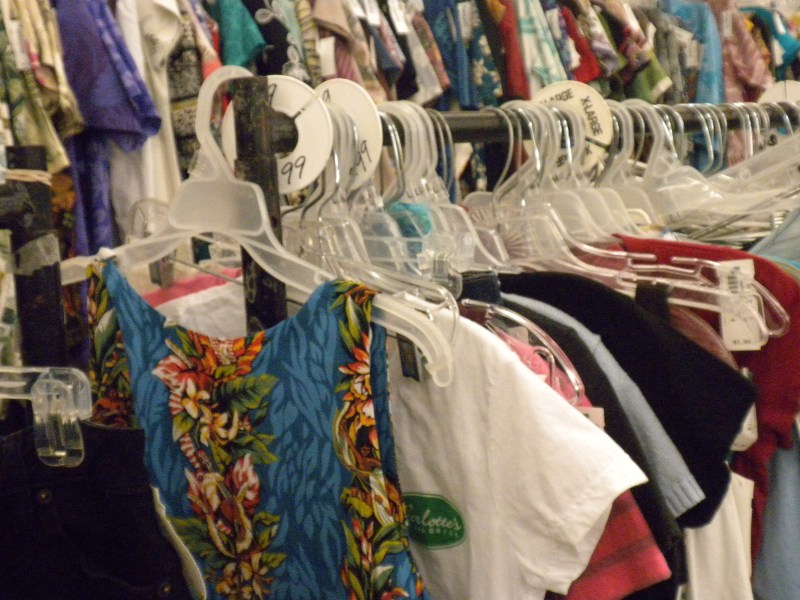
I remember the first time I drove Mama to my favorite thrift store in Virginia Beach. After thirty minutes, I was ready to leave. Mama? “But I haven’t seen everything yet!” And she did mean everything. I bought a paperback (it turned out to be a gay romance, the first one I’d ever seen — I didn’t know such things existed!) and sat down to read. I was halfway through that book before Mama was satisfied that she hadn’t missed anything. She had carefully looked at each and every blouse, skirt, dress, etc. in the store, sliding hangers across the racks one by one.

She was just as thorough at yard sales. She’d size up the offerings and quickly check out the prices. She wouldn’t waste time with people who weren’t serious about getting rid of things. But if they were, she’d look at everything. She’d spend so much time at some yard sales, she and the sellers were old friends by the time she handed over her cash. She’d come home and tell me their life stories.

Thrift shops, estate sales, consignment stores, rummage sales, church sales, flea markets, library sales, etc.– Mama could be found wherever bargains were waiting. She bought clothes and art and furniture and rugs and dishes — and lots of books.

Mama loved to read. And she loved to read to her granddaughter. She bought my little girl countless used books which were, eventually, passed along to three younger brothers. We still have some of those books.

And that is how I came to be reading Mark Alan Stamaty’s Who Needs Donuts? to my grandson Atticus this afternoon. At the end of the book, Atticus turned back to the page where Sam sits in the grass. He pointed out Mr. Bickford and the tiny giraffes and other creatures almost concealed within the myriad individual blades of grass. This marvelous book was another of my mother’s “lucky” finds.

What wonderful thrift store purchase is your favorite find?


Somebody Else’s Mail Art

As anyone with a chronic illness might tell you, we have our less-than-good days that sometimes string themselves together into a week or two and turn into depression. Those can be days when the voices in our heads sound something like this: Here I am on my back again and I can’t do anything productive and I’m so useless I’m wasting oxygen by breathing, etc.

On days like these, a letter can shine a ray of sunshine into the dim basement of my mind.

scan-2016-9-18-23-14-49

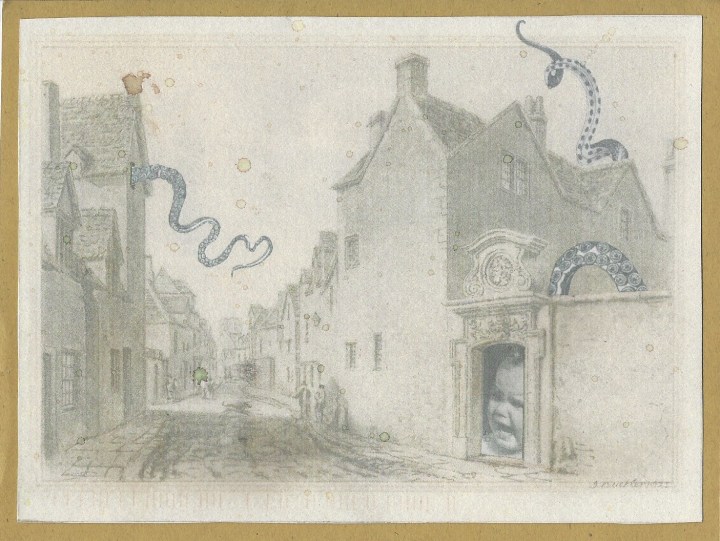
Postcard from Beq Parker

Most people communicate primarily with text messages and email, or Facebook and Skype. In these modern times, even some prison inmates send and receive email.*

Like me, you may have learned the hard way that emails can pick up an attitude as they zip over the fiber-optic lines — an unintended tone that distorts what you thought was an innocent message. “But that’s NOT what I meant!” I have been heard to moan. I suspect I self-edit to dry phrases to avoid messy misunderstandings.

And none of us would ever hit SEND when we’re angry, over-wrought or over-tired. We’ve all learned that lesson, right?

scan-2016-9-18-23-14-49-1

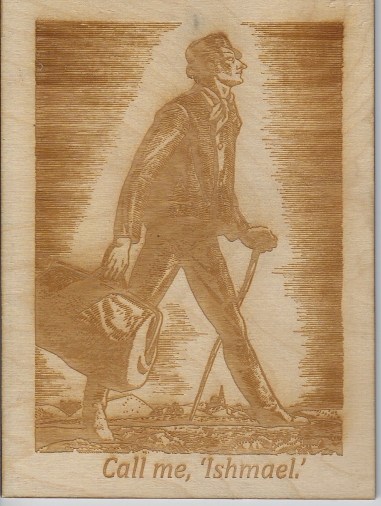
Right: Laser print on wood executed by Wes Cheney

Back in the olden days, before email, texting or even ANSWERING MACHINES, when I had a list of people to contact for, say, a food co-op or a ballot initiative or a mother’s club, it might take me repeated dialings of every number over several days to reach everyone on that list. And I had to actually talk to them and they might have quite a lot to say to me in return. It was time-consuming and unpredictable. And interesting.

When there was a bit of money, a group might choose to appoint someone to type up information, pay for Xerox copies at a copy shop, hand address envelopes, lick stamps, and visit a mail box to stop the lets inside and send them on their way. Of course, these mailings might still require follow-up phone calls.

Pre-answering machine and everything else we use now, communication required a lot more effort. Even though I am much better than I was when I first got sick, CFIDS/SEID still makes it impossible for me to imagine taking on this kind of work today.

As a person who is easily over-stimulated into exhaustion, the ease of email and text is not just convenient, but even almost life-saving. I can be part of a committee that meets once or twice a month and keeps in touch by email. I can turn my phone off when I need to, knowing it will accept messages and save them for me to read or listen to when I’m up to it.

Text is great for an impersonal exchange of factual information: what, where, date, time, etc. To avoid misunderstandings in more personal messages, there are those contemporary hieroglyphics — emoticons. Who can take offense when I end my message with a cute kitten or three little birds bracketed by musical notes?

But what I really like is real mail. Letters, cards, postcards. Envelopes  with snippets of yarn or scraps of fabric or sketches of quilts. Manilla envelopes of magazine articles or knitting patterns or relief-print exchanges. Hand-written letters are lovely even when I have to puzzle them out. Typewritten letters are never turned away. Handmade cards are a special delight but any card is a joy and carries something of the person who chose to send it.

scan-2016-9-18-23-30-30

“Holy Post” from Vikki Ensman


I wrote my first letter when I was a toddler. My mother held my fingers to the keys of her typewriter and, more or less, took dictation. (My aunt saved that letter. I still have it.) In grade school, I wrote to my aunt, both grandmothers, a great-grandmother, and a pen-pal in Australia. Now I exchange letters with school friends, Quaker friends, and several prison inmates. I send letters to my brother, my sister, an uncle, my step-mother, and my grandchildren. If they write back, that’s great. If they don’t, I write anyway.

Sometimes I make postcards or holiday cards or birthday cards. (see Mail Art in the menu above.) Sometimes these are relief prints done in multiples.Other cards are individually made. I hope that each letter or card I send out contains a moment of delight for the person opening the card.

There are wonderful examples of mail art all over the web.

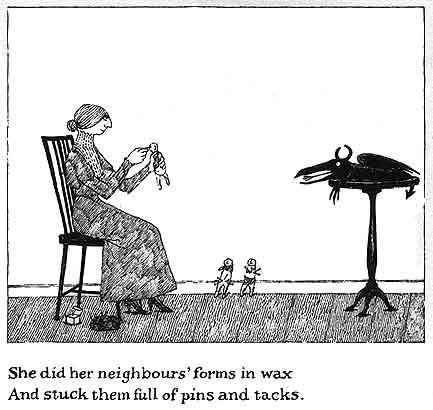
Perhaps you know the work of Edward Gorey?

edwardgoreysneighbours

I always think of Gorey as working strictly in black and white. But this article  shows a few envelopes he decorated with bright, playful colors. Aren’t they fun?

Maybe I’ll quit typing this now and go draw some of my own!

scan-2016-9-19-09-34-03

*The costs of internet connections between inmates and their families/outside are excessive and unexpectedly varied.

Laptops are not passed out to prisoners. (Few things are. Inmates are often responsible for buying their own underwear.) Where a laptop is available in a prison, the inmate who wants one must purchase the one offered.

In many of those states, prisoners can send as well as receive emails; family members access the email system online, while prisoners use special kiosks in their housing units. In some cases, photos or short video files can be attached to the messages – for an additional fee.

Prisoners and those who want to communicate with them via email buy “stamps” to send each message, which cost from $.17 to $.60 each depending on the prison system and the number of stamps purchased; the average price per email is $.40 to $.50.”

Books: the Obvious and the Undercover*

kindle-cover-1

Books out in the open and books inside a Kindle case.


There are not so many books on my side of the bed. Only five.

This is because our house was built in 1950 and our bedroom is not a large room. The bed itself is an old-fashioned ¾ size, extended lengthwise for my 6’2” husband. Only a small table fits between my side of the bed and the wall and it only holds around five books at a time while still leaving space for a cup of tea.

Here are my current five books:

  • The Ornament of the World: How Muslims, Jews, and Christians Created a Culture of Tolerance in Medieval Spain
  • Far More Terrible For Women: Personal Accounts of Women in Slavery
  • The Quakers, A Very Short Introduction by Ben Pink Dandelion (you are getting the author’s name because I enjoy telling you his name)
  • A Fort of Nine Towers, An Afghan Family Story
  • The New Revised Standard Edition of The Green Bible

And doesn’t that make me look like a serious reader? Since nobody ever sees this pile of books but me, I am only fooling myself.

I’m only halfway through three of these volumes, just beginning the fourth, and open The Green Bible mostly for reference. (Can you hear me blowing the dust off?)

Stories of enslavement can be hard to read.

And I haven’t made it though the rape scene of a ten-year-old Afghan boy. (As long as I don’t read it, maybe it never happened.) And I was doing so well before that. Qais Akbar Omar’s prose is flawless, a joy to read. I am sure he will handle this difficult scene with grace and beauty but I can wait to find out.

In front of this pile of books, on the coaster waiting for that cup of tea, is my Kindle Paperwhite, hooked up to its umbilical cord and safe in its needlepoint case. Here is where I keep my light reading, the books that entertain me when I am immobilized with the fevers, aches or insomnia of CFIDS. I am grateful that when I can’t write myself, I am seldom so ill that I cannot read.

Currently, magically concealed behind the Kindle screen, there are historical romances by Mary Blalogh and Sarah MacLean and Marion Chesney. In Chesney’s other incarnation as M.C. Beaton there are cozy mysteries. And here’s The Smoke Thief by Shana Abe (recommended by Smart Bitches, Trashy Books) and a book from Angie Sage’s Magyk series. And here’s the intriguing Transit in B-flat by Joeseph Erhardt, Fearless Leader of the Rich Writers’ Critique Group.

And oh, look! here’s have a sample of McDonough’s William Tecumsah Sherman. I read an intriguing review of that book somewhere and, when I didn’t find it in the library, thought I’d get acquainted with it before making a serious commitment that involves money.

There are also, sometimes, magazines beside the bed; rug hooking or quilting or mixed media magazines with articles that feed my dreams. But not today.

Less you might think me an ascetic, I will admit to more books in the bedroom than these few. There are books on the other side of the bed (which will not be listed because they aren’t mine since) and books on top of my chest of drawers and an actual bookcase on top of my husband’s dresser.

Of course, there are books, magazines, manuscripts, etc. in every other room of the house, too. And more books inside Little Free Library 3966 in front of our house, which itself is featured in the book Little Libraries, Big Hearts.

So, what books are beside your bed?

(*Books undercover are often also under the covers.)


A Smarter Phone

phone-1

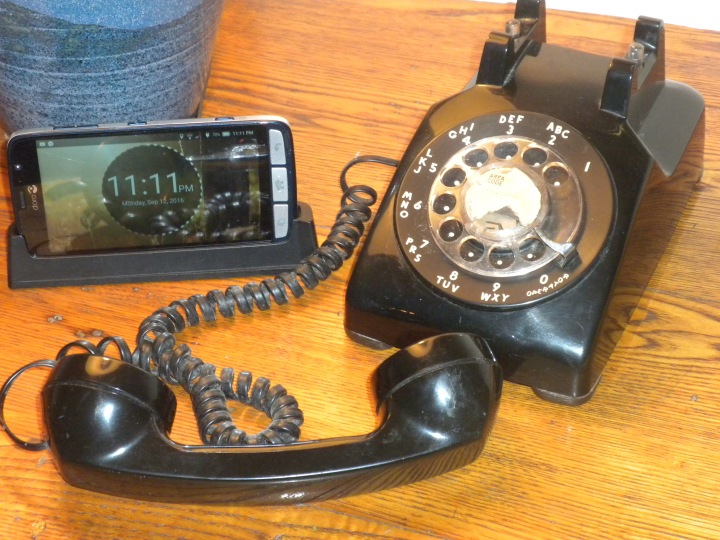
Above: One of these is not a phone. It just thinks it is.


My  reliable red flip phone did exactly what I expected it to do: it made phone calls.

But here’s what it didn’t do that I wasn’t expecting to need: easy texting.

Turns out, lots of people like to text and some of them text to me. To answer a text, I had to tap this key three times and that key twice and it took forever and my arthritic thumbs were sore! Not to mention (but I will) how frustrating this is and what confusion results when I’m in the wispy clutches of brain fog and anything and everything is already too much effort. When I wasn’t up to making a phone call because just the thought of interacting with a real person was overwhelming, texting on this flip phone was almost as taxing.

So I got a smart phone.

This phone is smarter than I am even when I’m at my most alert. E.g., I think I’m talking on the phone but the phone decides this would be an excellent time to take a video of my feet. OR — I think I’m answering my phone but my phone decides to show me little black and grey boxes of setting options.

Expletives were emitted (and not by the phone!) during these frustrating interruptions to my intentions. And my husband would say:

Why don’t you check the manual?

If there even was a manual, I wouldn’t want to check it. I just want to answer the phone! I DON’T WANT TO TAKE LESSONS IN HOW TO ANSWER THE PHONE!

Why don’t you check the manual?

So these days I’m getting along much better with my phone. We’ve had a while to get acquainted. Of course, I’ve had to give a little, modify my approach and pick up on the little hints my phone gives me about how it wants to be treated. In return, I get a little thrill every time I successfully answer the phone.

And the phone is kind enough to beautifully display photos of my grandchildren at the swipe of a thumb (such a useful feature when some kind-hearted person wants to show me endless photos of their cats). My phone will cooperate by taking pictures of an interesting bench for sale at a junk shop or kids rubber boots at a yard sale (Sent to DIL with Are these the right size?).

The phone is less cooperative when I want to play Pokemon Go with a grandson. It sulks and gets glitchy. I think it considers Pokemon Go beneath its dignity or maybe not part of its job description. Playing Pokemon Go is certainly way beyond any job description I would have ever written for a phone!

In fact, “phone” is not a good name for this device. Even “smart phone” isn’t sufficient. “Device” is more accurate but less descriptive. If you strung all the words that fit together to make a new noun to name this object in its full glory, you’d probably be speaking German and people would get up and leave the room before you were even finished enunciating all the syllables.

Now that the device and I are better friends, I am a better Friend (Quaker) because I am not cursing as often.

And my husband? Well, he decided to get his own smart phone (for reasons I won’t go into except to say that his black flip phone was left on the patio overnight during a thunderstorm). The phone came in the mail in a clean-looking box with a dock and a charging cord and a little folder explaining how to activate your account. Just like mine did.

And now, every time I hear my dear husband curse because he’s missed another call or he can’t access his voice mail, I oh-so-sweetly say to him:

Why don’t you check the manual?